
.png)

Where Does Your Lot Actually Stand?
Listed value and real selling price aren't the same. See if your lot is overpriced, underpriced or sitting for longer than it should be.
Let me get straight to the point- If your RV units are aging past 90 days, the pricing decision you made on day one is almost certainly part of the problem.
Most RV dealers already know this. But very few have the data, tools, or real-time market visibility to act before it shows up as aged inventory, margin compression, and floorplan pressure. Most pricing “work” is still a quick scan of listing sites and book values. That may look like research, but in today’s RV market, it’s structured guesswork.
Quick Overview of What This Article Covers
Most RV dealers are still pricing off listings and lagging valuation guides instead of live transaction data and real-time RV market intelligence. This leads to:
- Aging RV inventory
- Forced markdowns
- Increased floorplan interest costs
- Lower gross margins
Dealers who shift to data-driven RV pricing on day one are turning units faster, protecting margin, and creating a measurable performance gap heading into 2026.
In a market where 2025 closed with dealers holding massive inventories of unsold units even as 2026 models arrived , and where inventory aging and margin compression remain the two defining challenges, the gap between feeling informed and being informed is no longer just a pricing issue.
It’s a profitability and survival issue for U.S. RV dealerships.
I have been speaking to RV dealers almost every day, so alongside the report-based data, I also have the day-to-day conversations that tell an equally important part of the story.
Why RV Inventory Pricing Is Harder Than It Looks
Listing Prices Are Not Sale Prices
The most costly pricing mistake in RV dealerships today is simple:
Benchmarking off listings instead of actual transaction data
The most costly pricing mistake in RV dealerships today is simple: benchmarking off listings instead of actual transactions. When you price off listing sites, you are looking at what other dealers hope to get, not what the market is actually clearing at.
A 2023 Flagstaff sitting 140 days on another dealer’s lot should never become your pricing anchor. Yet that’s exactly how RV Dealers end up importing their mistakes into their inventory strategy.
In today’s environment where RV wholesale supply remains high and retail demand is more selective, the gap between asking prices and real sell-through is the difference between turning inventory and stockpiling it. This shows how you:
- Turn inventory efficiently
- Or accumulate aged units
Pricing off that pool means you are anchoring to unsold inventory instead of real demand, and that is why you might stay a step behind the market.
Listing Site Prices Are Backward-Looking
Searching RV values through listing sites typically surfaces:
- Forum discussions
- Outdated pricing guides
- Private seller listings
None of these reflect current dealer-to-consumer transaction behavior.
Most RV book values lag the market by several months. In a market where pricing shifts weekly, that means you're navigating with last season's map.
The result is consistent across dealerships:
- Units are priced too high initially
- Inventory sits longer than expected
- Price reductions become reactive
- Margin is lost during forced markdowns
You're Pricing One Unit Against Three Model Years at Once
Here's a problem that didn't exist at this scale three years ago.
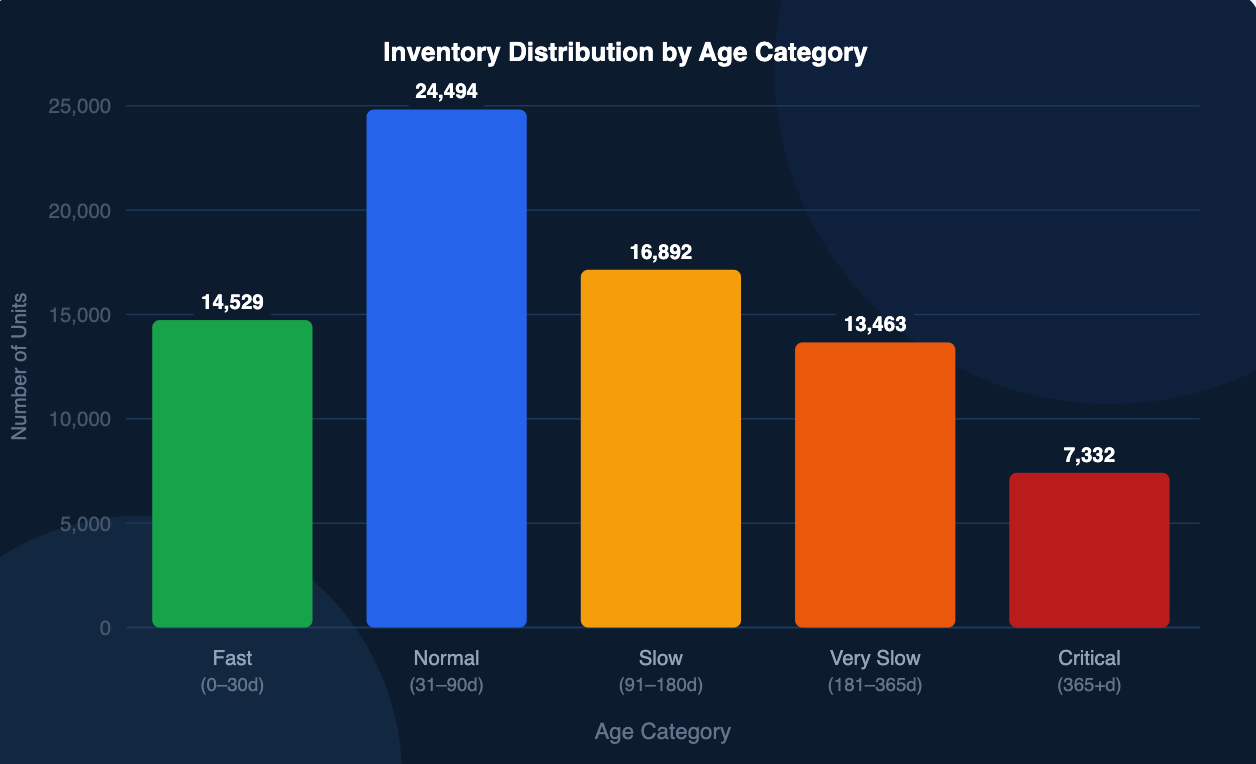
According to Rapidious market data, as of mid-2025: 91,800+ new 2025 RV units remained unsold nationally, 10,000+ new 2024 units were still on lots, and 1,600+ new 2023 units sat unsold - units that should have cleared two years ago.
Walk any dealership today and you’ll see a 2026 model sitting next to a heavily aged 2024 that hasn't moved in eight months.
This isn’t just a clearance issue. It’s a pricing architecture problem.
You’re not pricing a single unit, you’re positioning it within a multi-year inventory stack competing for the same buyer. A three-year price ladder with no clean floor.
No listing comp will tell you how to price a 2024 carryover against a 2026 arrival.
That requires real-time RV inventory velocity data across model years, something static pricing methods simply cannot provide.
What That Guesswork Is Actually Costing You
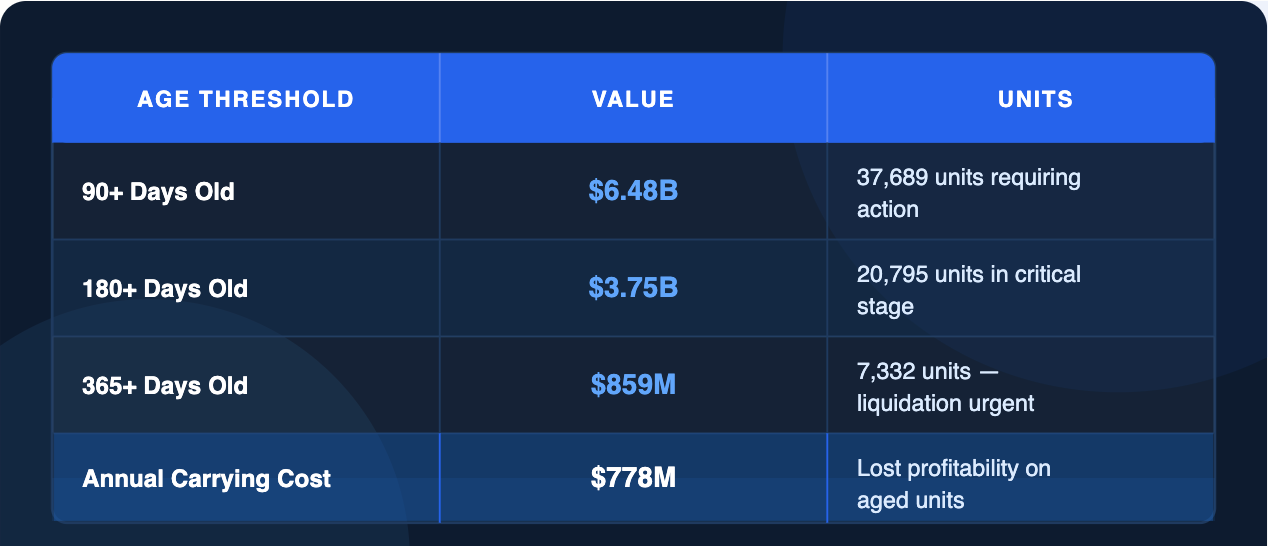
Based on Rapidious analysis of U.S. RV dealership data: units aged beyond 120 days typically require 10-15% price reductions. On a $60,000 travel trailer, that's $6,000-$9,000 in lost margin.
This loss isn’t caused by poor negotiation or weak demand. It’s caused by incorrect pricing on day one with three unsold comps and a gut call.
Rapidious estimates RV dealers absorb approximately $63.5 million annually in floorplan interest on inventory aged beyond 12 months. That figure doesn't include the forced markdown. It's purely the cost of the unit sitting there while the clock runs.
At the same time:
Average RV dealership margins have declined from 15–20% to ~12% through 2025
Most dealers attribute this to softening demand. Demand is part of it. But the operational cost of mispriced inventory, units held too long at the wrong number is embedded in that compression too, and it's the part dealers actually have control over.
Dealers who price accurately from day one are protecting margins that others lose by day 120.
If You’re Still Not Convinced, Look at the Midwest
The Midwest clearly demonstrates why “just lower the price” is not a strategy.
Rapidious inventory data shows the Midwest holds approximately 25.7% of total U.S. RV inventory, yet units still age significantly longer than the national average.
Despite aggressive pricing, inventory sits longer due to oversupply & misaligned regional demand. Discounting alone cannot fix market saturation.
To know whether a price adjustment will actually drive a sale, dealers need:
- Real-time supply visibility
- Regional demand signals
- Inventory velocity benchmarks
Not just national listing comparisons.
What the Data Is Telling RV Dealers to Do Differently
The broader dealership technology landscape has reached a clear consensus: RV dealers must change how they price inventory.
Only a small percentage of dealers are using real-time market data or market intelligence to guide pricing. Not planning to. Not evaluating it. Actually using it. And here's what I have seen so far-
Dealers using Rapidious Titan.AI are adjusting their pricing every 30 minutes based on live market signals pulled from real transaction data across the U.S, while on the other hand dealers running on listing scans , older book values, and gut feel are doing it once a week in a Monday morning meeting.
In a market that can shift meaningfully in seven days, those aren't two versions of the same approach. They're two different games entirely.
2026 is the year that gap starts to show up visibly in the numbers. It already is for the dealers I talk to every day.
What Smarter RV Inventory Pricing Looks Like in Practice
Today the dealers outperforming their peers on turns and margin are not necessarily better operators in every dimension; they are the ones updated of instant changes, letting data/market intelligence drive better pricing inputs, and they are doing it earlier than everyone else.
Smarter RV pricing looks like this:
A new Class C arrives on the lot. Before it's priced, a dealer using Rapidious Titan.AI already has:
- Real-time data on how similar units performed over the past 90 days in their market
- Local supply depth and competing rooftop inventory visibility
- Regional demand trends across local, regional, and national context
- Price elasticity and velocity benchmarks grounded in actual transaction data - not asking prices
The unit is then priced to match actual demand conditions on day one. That eliminates the need for reactive pricing at day 90. And that gap - day 1 vs. day 90 - is where margin is either protected or lost.
In a world where Forest River, Keystone, and Jayco each have thousands of units aged past a year, and Coleman alone accounts for more than 4.75% of the U.S. RV market, data-driven market intelligence is what lets dealers see localized oversupply risk early, at the unit level.
Not after inventory has already aged.
How Rapidious Titan.AI Closes the Pricing Blind Spot
The gap between feeling informed and being informed comes down to one thing: the quality of data behind the pricing decision.
Rapidious Titan.AI is built specifically for RV dealerships to close that gap - replacing listing-site guesswork and lagging book values with live transaction intelligence across the U.S. and Canadian RV market.
For dealers managing pricing, appraisals, and aging inventory daily, it means:
- Pricing decisions grounded in what units actually sold for and how fast - not what competitors are hoping to get
- Live visibility into competing rooftop inventory across local, regional, and national markets
- Aging risk surfaced at the VIN level before units cross the thresholds where margin recovery becomes difficult
- Appraisal support backed by real transaction comps - so trade-in decisions don't rely on gut feel or a listing site snapshot
Mispriced inventory is largely a data problem. Rapidious Titan.AI is built to solve it.
Key Takeaways for RV Dealers

RV Market Intelligence, Delivered Weekly.
Actionable insights on pricing shifts, inventory velocity, competitive positioning built from market derived intelligence.

.avif)
.avif)
.svg)






-
Heading 2
Heading 3
Heading 4
Lorem ipsum dolor sit amet, consectetur adipiscing elit, sed do
Ordered list
Unordered list
Text link
Bold text
Emphasis
-