

Where Does Your Lot Actually Stand?
Listed value and real selling price aren't the same. See if your lot is overpriced, underpriced or sitting for longer than it should be.
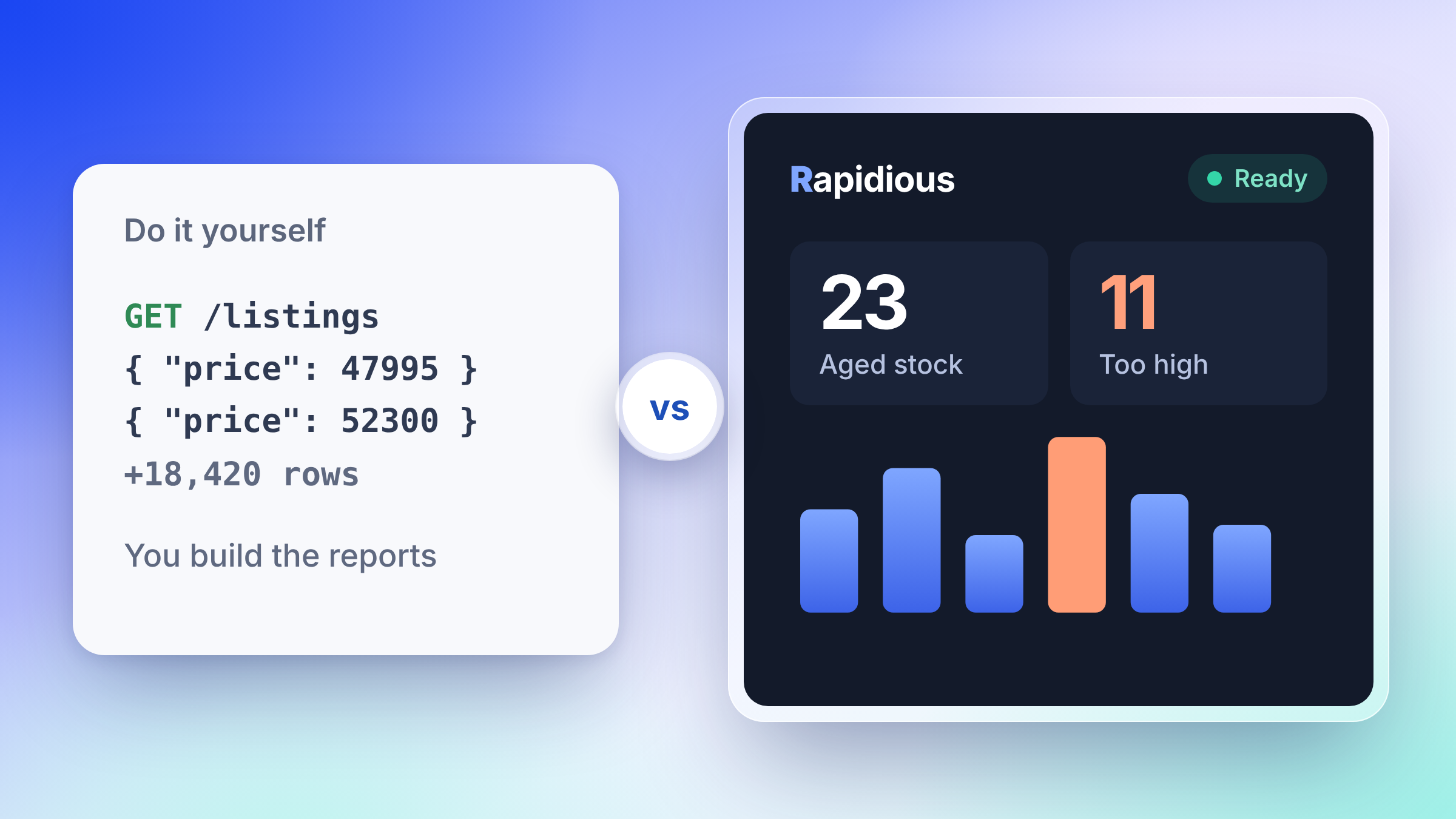
Dealer groups that want to use market data often face a build-or-buy choice: pull raw data into their own systems, or use a platform where the analysis is already set up. A market data API fits the first approach, and RV market intelligence fits the second. The better fit usually depends on the team's data skills, timeline and how custom the analysis needs to be.
What is the difference between a market data API and RV market intelligence?
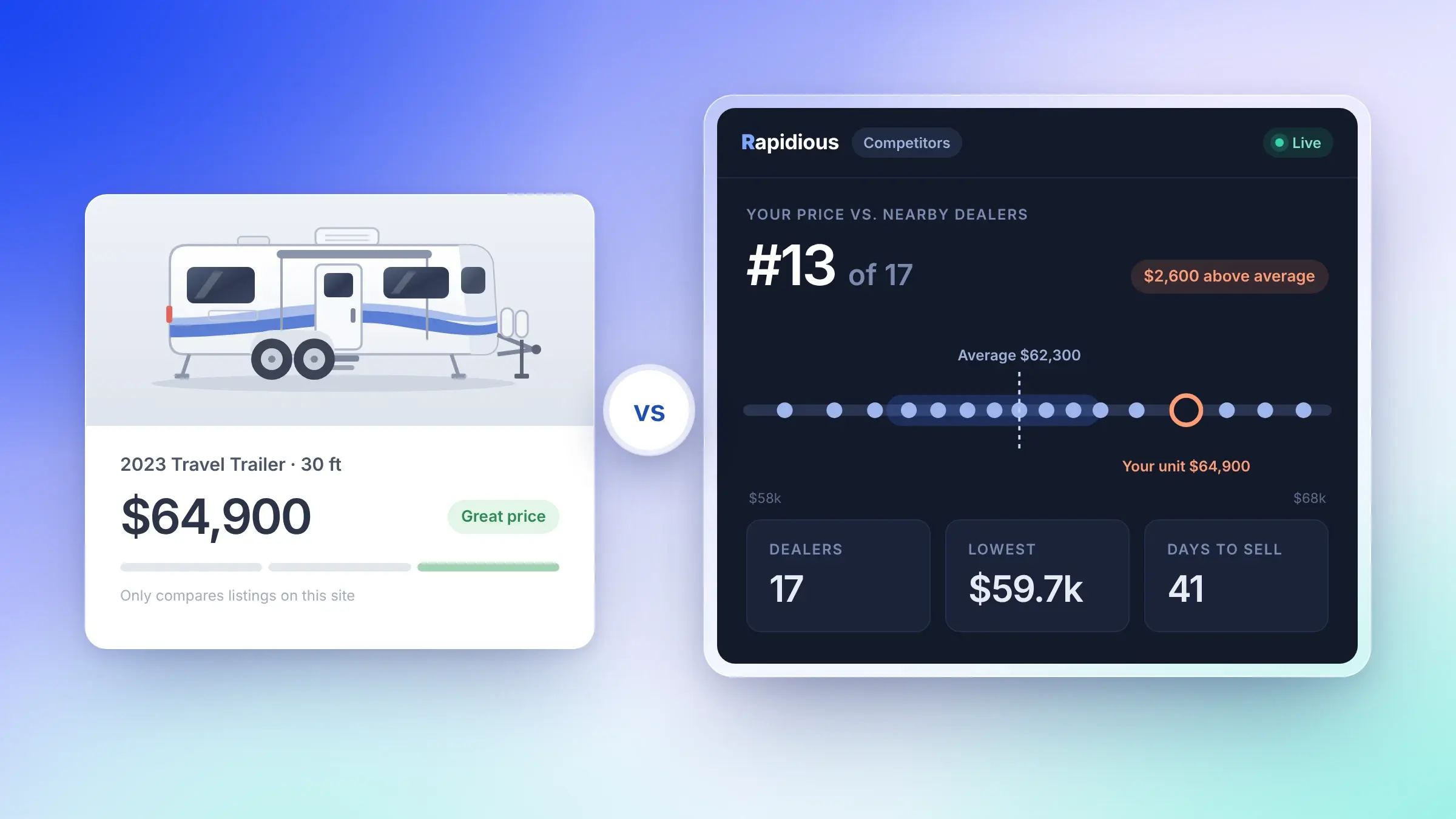
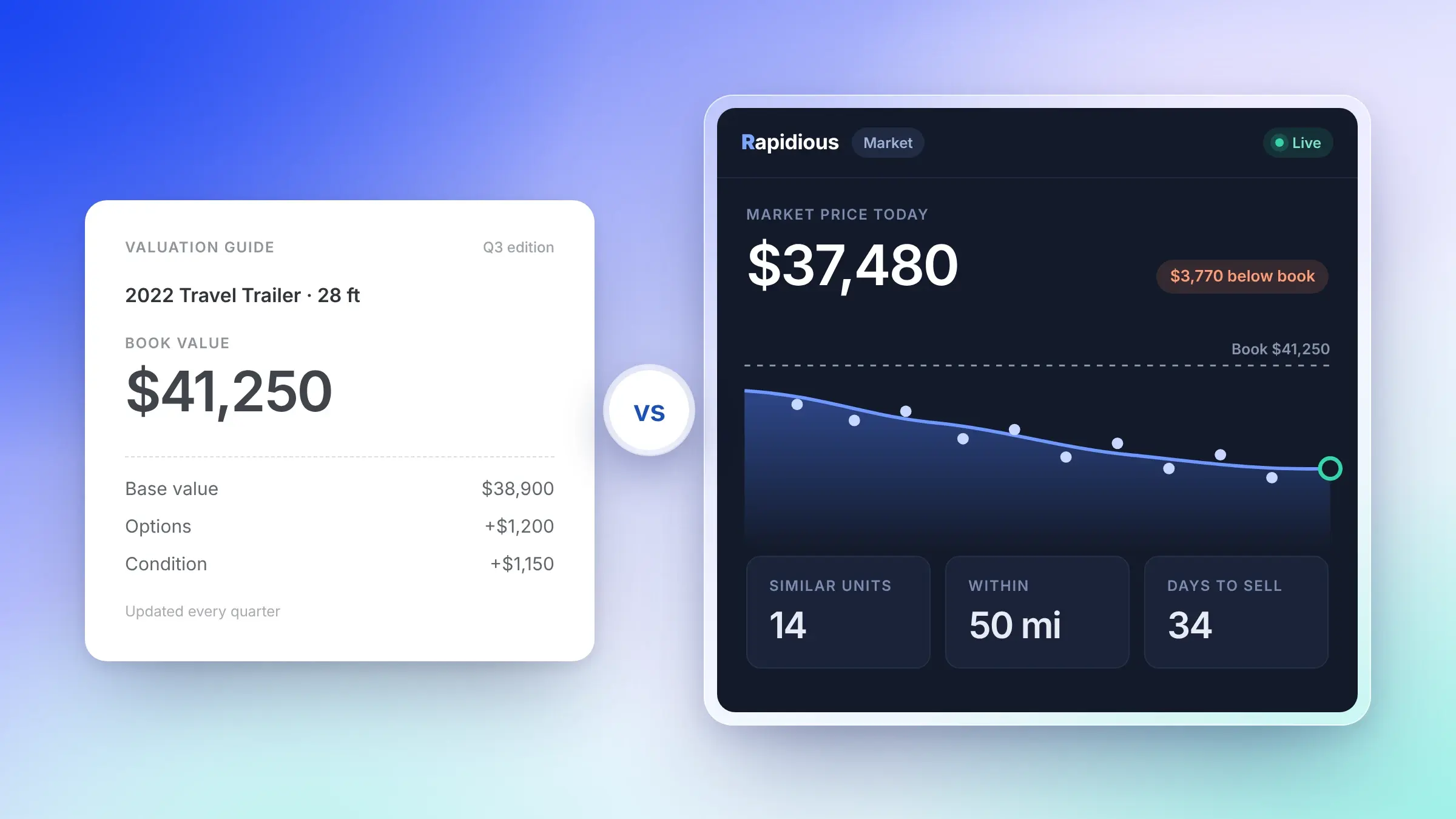
A market data API delivers raw listing and pricing data for a dealer's own team to analyze, while RV market intelligence delivers ready-made views built around RV pricing, appraisal and stocking. The main trade-off is flexibility versus the time and skills needed to build.
What is a market data API?
A market data API is a data feed that developers connect to directly. It commonly provides active and historical listings, prices, vehicle details and supply metrics, often across several vehicle types. The dealer's team decides how to store, clean, analyze and display the data.
What is RV market intelligence?
RV market intelligence is a platform that tracks retail RV listings across dealer rooftops. It shows listed prices, the number of comparable units, days on lot and units that appear to have sold, and is often refreshed daily. Three terms used in this comparison:
- Listed price: the asking price shown in a dealer's public listing. It may differ from the final selling price.
- Days on lot: the number of calendar days a unit has been publicly listed for sale, counted from the day the listing first appears online until it stops appearing.
- Sold signal: a unit that was listed and then stops appearing is inferred as sold. This is an estimate based on listing data, not a confirmed sale or a final selling price.
When is a market data API useful?
A market data API tends to be most useful when a dealer group has its own data team and needs analysis that a ready-made platform may not cover.
- Custom analysis: the team can build the dashboards, models and reports the group wants.
- Combining data: market data can be joined with DMS, CRM, cost and gross data.
- Control of method: the team decides how comparables are matched, how outliers are handled and how metrics are defined.
- Several vehicle types: an API can suit groups that sell RVs alongside other vehicles.
When might a market data API not be the best fit?
A market data API may be less practical when a dealer lacks in-house data skills or needs results soon.
- No data team: turning raw data into decisions typically takes engineering and analyst time.
- Short timelines: building, testing and rolling out internal tools can take a while.
- Upkeep: data changes, edge cases and maintenance fall on the dealer's team.
- RV-specific matching: matching RVs by floorplan, length and class can take extra work, especially if the data is designed mainly for other vehicles.
When is RV market intelligence useful?
RV market intelligence tends to be most useful when a dealer wants market data in daily decisions without building and maintaining tools.
- Ready-made views: pricing, appraisal, aging and supply views are already set up.
- RV-specific comparisons: comparables and segments reflect how RV dealers work.
- Upkeep: the provider maintains the data, matching and updates.
- A shared view: sales and inventory managers can work from the same market picture.
When might RV market intelligence not be the best fit?
RV market intelligence may be less suitable when a dealer needs fully custom analysis or raw data.
- Custom analysis: dealers work within the views the platform provides.
- Control of method: how comparables and metrics are defined is set by the provider.
- Several vehicle types: an RV-focused platform is designed around RVs.
- Raw data in internal systems: export and integration options vary, so they are worth checking against a dealer's setup.
How can dealers use both together?
Some larger dealer groups use both, with each serving a different team. A common setup:
- Sales and inventory teams use RV market intelligence for daily pricing and appraisal.
- The data team uses a market data API, or the platform's exports where available, for group-level analysis.
- Both teams agree on shared definitions, such as days on lot, so figures from each source line up.
Which tool fits which task?
Frequently Asked Questions
RV Market Intelligence, Delivered Weekly.
Actionable insights on pricing shifts, inventory velocity, competitive positioning built from market derived intelligence.






-
Heading 2
Heading 3
Heading 4
Lorem ipsum dolor sit amet, consectetur adipiscing elit, sed do
Ordered list
Unordered list
Text link
Bold text
Emphasis
-