

Where Does Your Lot Actually Stand?
Listed value and real selling price aren't the same. See if your lot is overpriced, underpriced or sitting for longer than it should be.
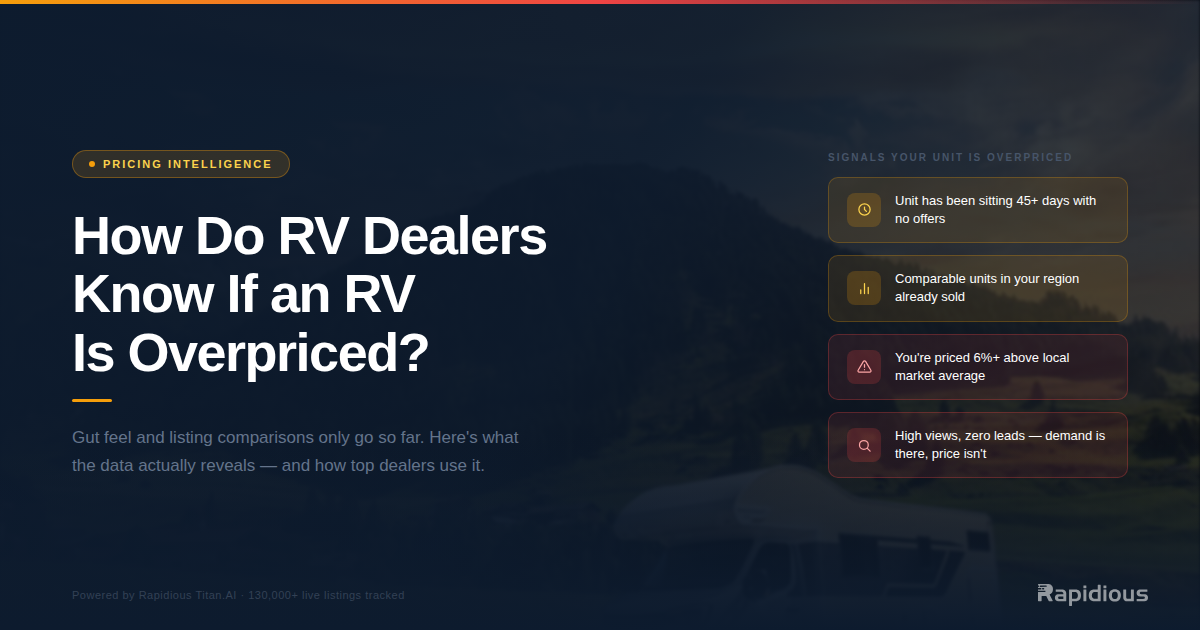
An RV is overpriced when its price doesn't match current market conditions and expected demand, not simply when it sits above a guidebook number. A unit can be above a reference value and still be correctly priced if comparable units are scarce and demand is strong. What matters is the unit's price position against the live market, not its distance from a static figure.
What Does "Overpriced" Actually Mean?
Most pricing mistakes start with the wrong definition. "Overpriced" is not "higher than the NADA or J.D. Power value." Those guidebooks are built on periodic, industry-wide averages, and they can lag real conditions during fast price shifts. A unit priced above a guidebook can be exactly right for its market, and a unit priced below one can still be too high if demand for that model has collapsed.
The better definition is simpler: an RV is overpriced when it is priced higher than comparable units the market is actually rewarding right now.
Overpricing is a mismatch with the live market, not a gap from a reference number.
How to Tell If an RV Is Priced Above Market
To judge price position, a dealer needs to look past the sticker and read the unit against its real competitive set. The signals that matter:
- Comparable inventory. How is this unit priced against similar make, model, year, and condition units available now?
- Local, regional, and national pricing. A unit can look fine nationally and be well above the local market, where the buyer actually shops. Read the narrowest relevant market first, then widen out.
- Competitor pricing. What are nearby dealers asking for comparable units, and how does this unit stack up?
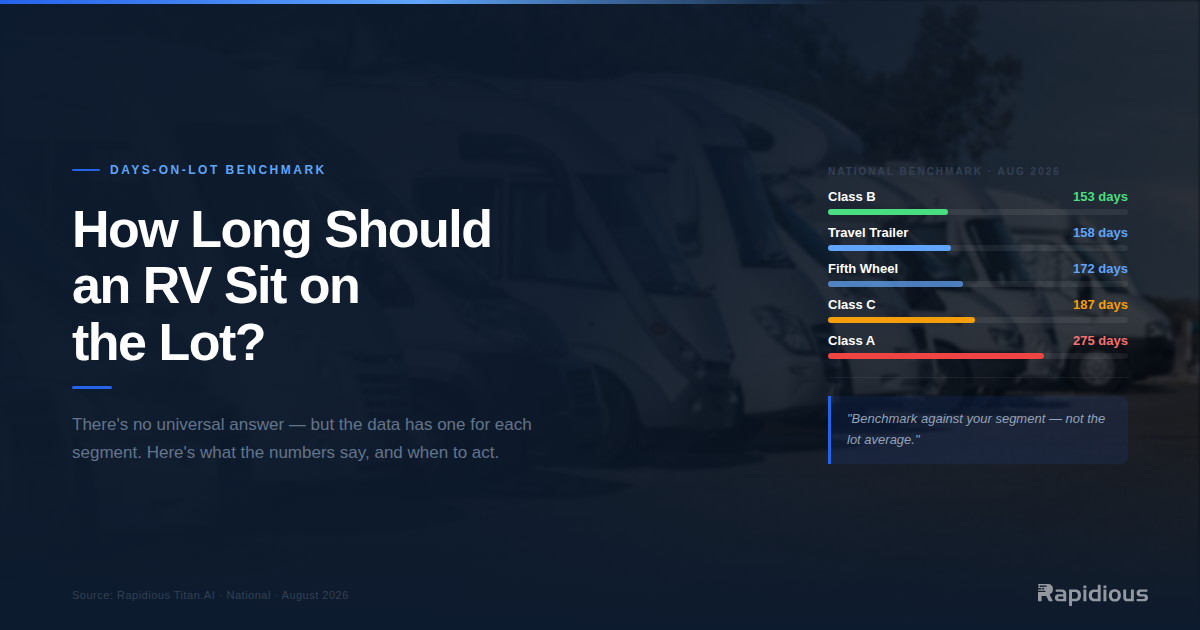
- Days on lot. A unit aging while comparable units sell is one of the clearest signs price may be the problem. On its own it isn't proof, but combined with an above-market price, it's a strong signal.
- Sales velocity. If comparable units are moving quickly and this one isn't, the market is telling you the price is out of step.
No single signal is a verdict. A unit sitting a long time in a segment where everything is slow points to weak demand, not overpricing. A unit sitting while comparable units sell fast, priced above the market, is overpriced. The combination is what confirms it.
Should Dealers Always Match the Lowest Competitor?
No. Matching the lowest listed price is a race to the bottom that ignores condition, configuration, demand, and how long that competitor's unit has actually been sitting. The lowest price in the market is often a distressed or mispriced unit, not the market rate.
The goal is not to be the cheapest. It is to be correctly positioned: priced where a unit of this condition and configuration is actually selling, given current demand and available supply. Sometimes that's below a competitor, sometimes above.
How Much Should Dealers Adjust an Aging Unit?
Once a unit is confirmed overpriced, the size of the correction depends on how far its price has drifted from where comparable units are selling, not on a flat percentage or a calendar-based discount schedule. A small nudge on a unit that is meaningfully above market wastes time the unit doesn't have. A decisive, market-aligned correction moves it. The right number comes from the gap between the current price and the live market rate, not from a rule of thumb.
A Practical RV Pricing Decision Framework
Turn the signals above into a repeatable decision:
- Check the reference, then set it aside. Note the guidebook value for context, but don't treat it as the answer.
- Build the comparable set. Identify similar make, model, year, and condition units currently available.
- Read price position by market. Compare local first, then regional, then national.
- Layer in movement. Add days on lot and comparable sales velocity to see whether the market is rewarding this price.
- Separate price from demand. Decide whether the issue is an above-market price or weak demand for the segment. The fixes are different.
- Correct to the market, not to a competitor or a percentage. Move the price to where comparable units are actually selling.
Ask yourself:
- Are we judging price against a static guidebook, or against what comparable units are selling for this week?
- Do we know how this unit's price compares locally, not just nationally?
- When a unit ages, can we tell whether it's a pricing problem or a demand problem before we discount?
Dealers using Rapidious Titan can answer all three from a single view, built on live market data rather than a reference figure or a monthly spreadsheet review.
How Rapidious Titan Helps Dealers Price to the Market
Judging price position correctly means reading a unit against live comparables, across the right market, alongside how fast similar units are actually moving. That's hard to do by hand across a full lot. That's the gap Rapidious Titan closes:
- Live local, regional, and national comparables on every unit, so price position is read against the market the buyer actually shops, not a national average.
- Combined price-position, days-on-lot, and velocity signals, so a dealer can tell an overpriced unit from a slow-demand segment instead of guessing.
- Market-based correction guidance, so an adjustment matches where comparable units are selling rather than a flat percentage or the lowest competitor.
An RV is overpriced when its price stops matching the market, not when it clears a guidebook number. Rapidious Titan is built to show dealers that gap while it's still a pricing decision, before it becomes aged, discounted inventory.
Frequently Asked Questions
How do dealers know if an RV is overpriced?
An RV is overpriced when it's priced above comparable units the market is currently rewarding, shown by a price above the local market combined with aging while similar units sell. A high guidebook gap alone doesn't prove it.
Should RV dealers match the lowest competitor price?
No. The lowest listed price is often a distressed or mispriced unit, not the market rate. The goal is correct positioning for the unit's condition and demand, which may sit above or below a competitor.
How much should a dealer discount an aging RV?
By the gap between its current price and where comparable units are actually selling, not by a flat percentage or a calendar schedule. A market-aligned correction moves a unit that small nudges won't.
RV Market Intelligence, Delivered Weekly.
Actionable insights on pricing shifts, inventory velocity, competitive positioning built from market derived intelligence.
.svg)





-
Heading 2
Heading 3
Heading 4
Lorem ipsum dolor sit amet, consectetur adipiscing elit, sed do
Ordered list
Unordered list
Text link
Bold text
Emphasis
-